What Is Secure Access Service Edge (SASE)?
Tue, 15 October 2024

Follow the stories of academics and their research expeditions

A Work Breakdown Structure in project management is a stratified order of the tasks to complete a project.
A project management tool with a visual, hierarchical, and deliverable-oriented deconstruction of a project that breaks the work into a structure.
It is the principle to articulate the scope of our projects in a highly structured manner. The purpose is to create a work breakdown, identify it, and set a vision of the project.
At its simplest, we take the entire work project of the structure and the scope is meeting deliverables.
So, a lot of time there are questions on WBS, and people can’t find out the difference between a WBS tool and the way it processes it in a project. Let’s clarify what is a work breakdown structure.
Work Breakdown Structure (WBS) is the tool for a hierarchical listing of tasks and deliverables that organize the overall project goals and scope. The lists at the lowest level must be conveyable and quantifiable.
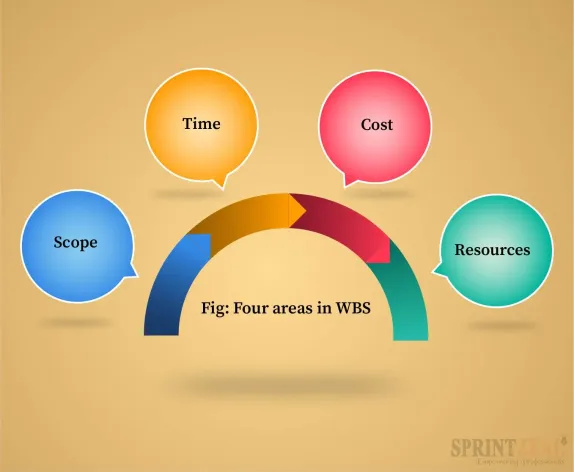
A project manager uses this common productivity technique to identify, scope, cost, and schedule baselines, so that project plans are meeting deliverables. Simply put, it is an advanced view of the total project.
This tool splits the project structure into smaller tasks to make the work a manageable deliverable. To meet the project goals or needs, the deliverables are assigned tasks to be able to further break down into subtasks.
The Project Management Institute (PMI) in the Project Management Book of Knowledge (PMBOK) guide defines the Work Breakdown Structure as a “deliverable oriented hierarchical decomposition of the work to be executed by the project team.”
Suggested Read: Best Agile Tools For Project Managers In 2022
There are two types of WBS:
1) Deliverable-Based WBS
2) Phase-Based WBS
Deliverable-Based is the most common and preferable approach. The elements identified in the first level of WBS make the differences between the two WBS types.
These approaches rely upon the time or scope of your project segregation.

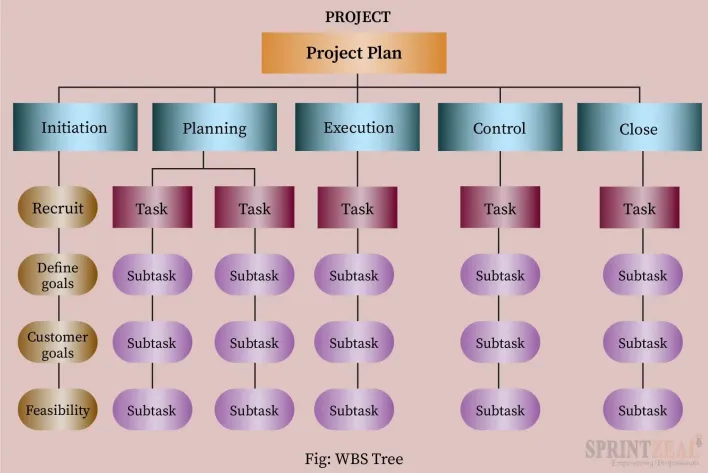
A deliverable-oriented WBS (also known as product-oriented WBS) divides major parts of the project scope as control accounts into work packages or subtasks and manageable deliverables.
Deliverables (products, services, or results) are substantial elements that are essential to fulfill to achieve the project.
Here’s an example of a WBS in a deliverable based on the given figure below for a project.
A Phase-Based WBS is similar to a deliverable phased WBS but more organized by phases in a process rather than deliverables.
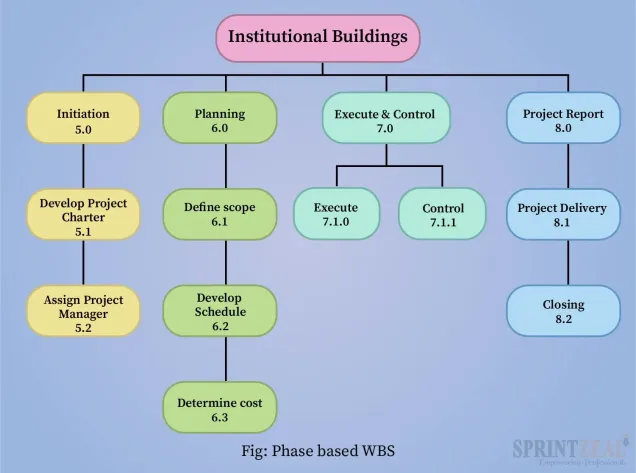
It put in view the final deliverable on the top (highest level) of the hierarchy of the work breakdown structure with the WBS levels below showing the five elements (initiation, planning, execution, control, and closeout) of a project. Each element is a typical phase of a project.
Likewise, as deliverable-based WBS, the project phases are broken into work packages and project deliverables.
The below figure is an example of a phase-based WBS sample for the same project.
Here is the vital process to how to create a work breakdown structure:
- Utilize a WBS template.
- Study the work activities in the project
- Document the WBS
- Identify all major objectives and deliverables
- Break main deliverables into sub-products
- Break sub-products into tasks
- Set the structure for project management
- Identify support activities
- Assign unique identifiers to elements
- Organize a planning workshop
- Create WBS Dictionary and Glossary
- Create a Gantt Chart schedule
- Associate the WBS
- Consolidate the WBS into the project plan
Check out this list of the latest project management software to use in 2022
The goals of creating a WBS include:
- Identify potential scope risks
- Define the overall project scope
- Identify communication points
- Estimates project costs
- Helps in resource allocation
- Clarity to risky work efforts
- Clarity to vital work efforts
- Correlation between activities and deliverables
- Team engagement and collaboration
There are various work break down structure benefits as it is,
- Define, organize, and manage the project.
- Boosts project efficiency.
- Optimized project scheduling.
- Project Execution.
- Control of project vision and potential risks.
- Engagement.
- Accountability.
- Estimate and control resources.
- Estimate budget and time.
- Set project milestones.
Conclusion
There are frequent pitfalls to building a WBS. Despite that, WBS defines and shapes the work at its best. Stakeholders get better insights into the project. Each product has potential risks. It's apt to identify potential risks.
The definition of work breakdown structure is that it provides a necessary framework with accurate and readable project organization. It lays out the total project in advance. Plus, the costs, budgets, and schedules can be established by the project managers with referring examples of work breakdown structure.
Sprintzeal is one such platform that is a reputed source for certification. Check out the courses on PMP certification and accelerate your career today!
Frequently Asked Questions
1) What is a work break down structure in simple terms?
A WBS for project management is a tool to define, organize, and manage to achieve the project.
It helps to estimate the costs, time, and resources and improves the efficiency of the project.
2) What is a WBS example?
Let’s consider building a work breakdown structure of a building house, a resource has to include products such as “building materials” (a deliverable), not “making slurry” (an activity).
3) What is the purpose of a work breakdown structure?
The ultimate purpose of WBS is to put on organized data to assign the activities required to perform on the project.
WBS not only facilitates but improves resource decisions, identifies activities, and facilitates milestones to improve trades. It does not direct possessions.
4) What are the 3 levels of WBS?
At the simplest, it comprises 3 levels. It characterizes the project's main deliverables, control accounts, project deliverables, and work packages.
A Work Breakdown Structure in project management is a stratified order of the tasks to complete a project.
A project management tool with a visual, hierarchical, and deliverable-oriented deconstruction of a project that breaks the work into a structure.
It is the principle to articulate the scope of our projects in a highly structured manner. The purpose is to create a work breakdown, identify it, and set a vision of the project.
At its simplest, we take the entire work project of the structure and the scope is meeting deliverables.
So, a lot of time there are questions on WBS, and people can’t find out the difference between a WBS tool and the way it processes it in a project. Let’s clarify what is a work breakdown structure.
Work Breakdown Structure (WBS) is the tool for a hierarchical listing of tasks and deliverables that organize the overall project goals and scope. The lists at the lowest level must be conveyable and quantifiable.
A project manager uses this common productivity technique to identify, scope, cost, and schedule baselines, so that project plans are meeting deliverables. Simply put, it is an advanced view of the total project.
This tool splits the project structure into smaller tasks to make the work a manageable deliverable. To meet the project goals or needs, the deliverables are assigned tasks to be able to further break down into subtasks.
The Project Management Institute (PMI) in the Project Management Book of Knowledge (PMBOK) guide defines the Work Breakdown Structure as a “deliverable oriented hierarchical decomposition of the work to be executed by the project team.”
Suggested Read: Best Agile Tools For Project Managers In 2022
There are two types of WBS:
1) Deliverable-Based WBS
2) Phase-Based WBS
Deliverable-Based is the most common and preferable approach. The elements identified in the first level of WBS make the differences between the two WBS types.
These approaches rely upon the time or scope of your project segregation.
A deliverable-oriented WBS (also known as product-oriented WBS) divides major parts of the project scope as control accounts into work packages or subtasks and manageable deliverables.
Deliverables (products, services, or results) are substantial elements that are essential to fulfill to achieve the project.
Here’s an example of a WBS in a deliverable based on the given figure below for a project.
A Phase-Based WBS is similar to a deliverable phased WBS but more organized by phases in a process rather than deliverables.
It put in view the final deliverable on the top (highest level) of the hierarchy of the work breakdown structure with the WBS levels below showing the five elements (initiation, planning, execution, control, and closeout) of a project. Each element is a typical phase of a project.
Likewise, as deliverable-based WBS, the project phases are broken into work packages and project deliverables.
The below figure is an example of a phase-based WBS sample for the same project.
Here is the vital process to how to create a work breakdown structure:
- Utilize a WBS template.
- Study the work activities in the project
- Document the WBS
- Identify all major objectives and deliverables
- Break main deliverables into sub-products
- Break sub-products into tasks
- Set the structure for project management
- Identify support activities
- Assign unique identifiers to elements
- Organize a planning workshop
- Create WBS Dictionary and Glossary
- Create a Gantt Chart schedule
- Associate the WBS
- Consolidate the WBS into the project plan
Check out this list of the latest project management software to use in 2022
The goals of creating a WBS include:
- Identify potential scope risks
- Define the overall project scope
- Identify communication points
- Estimates project costs
- Helps in resource allocation
- Clarity to risky work efforts
- Clarity to vital work efforts
- Correlation between activities and deliverables
- Team engagement and collaboration
There are various work break down structure benefits as it is,
- Define, organize, and manage the project.
- Boosts project efficiency.
- Optimized project scheduling.
- Project Execution.
- Control of project vision and potential risks.
- Engagement.
- Accountability.
- Estimate and control resources.
- Estimate budget and time.
- Set project milestones.
There are frequent pitfalls to building a WBS. Despite that, WBS defines and shapes the work at its best. Stakeholders get better insights into the project. Each product has potential risks. It's apt to identify potential risks.
The definition of work breakdown structure is that it provides a necessary framework with accurate and readable project organization. It lays out the total project in advance. Plus, the costs, budgets, and schedules can be established by the project managers with referring examples of work breakdown structure.
Sprintzeal is one such platform that is a reputed source for certification. Check out the courses on PMP certification and accelerate your career today!
1) What is a work break down structure in simple terms?
A WBS for project management is a tool to define, organize, and manage to achieve the project.
It helps to estimate the costs, time, and resources and improves the efficiency of the project.
2) What is a WBS example?
Let’s consider building a work breakdown structure of a building house, a resource has to include products such as “building materials” (a deliverable), not “making slurry” (an activity).
3) What is the purpose of a work breakdown structure?
The ultimate purpose of WBS is to put on organized data to assign the activities required to perform on the project.
WBS not only facilitates but improves resource decisions, identifies activities, and facilitates milestones to improve trades. It does not direct possessions.
4) What are the 3 levels of WBS?
At the simplest, it comprises 3 levels. It characterizes the project's main deliverables, control accounts, project deliverables, and work packages.

Nchumbeni Yanthan
Nchumbeni, a content specialist, creates easy-to-understand educational content, helping diverse clients and millions of learners achieve career goals with clarity and impact.
Tue, 15 October 2024
Fri, 06 December 2024

Wed, 16 October 2024


© 2024 Sprintzeal Americas Inc. - All Rights Reserved.

 USA : +1315-322-7821
 UK : +44 7700 174870
 IND : +919008230179
 AUS : +61 480 005 455
Leave a comment